
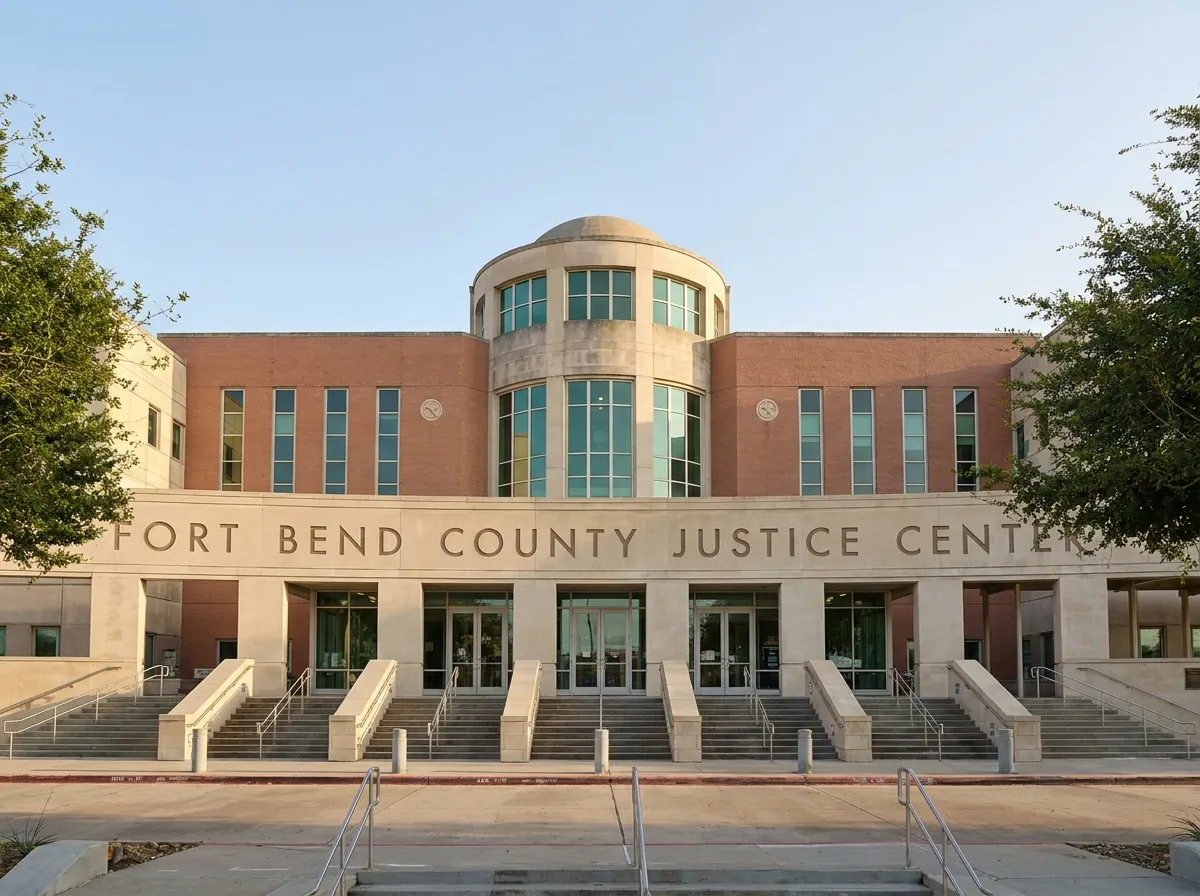
Court records in Fort Bend County, Texas, are maintained by the District Clerk and the County Clerk and can be accessed through online tools, official court portals, and the clerk's offices. FortBendCourt.us can help you find publicly available court record information for Fort Bend County. You can also search records directly through the county's official portals, visit the clerk's office in Richmond, or use statewide resources provided by the Texas judicial branch.
Fort Bend Court System Overview
Fort Bend County is part of the Texas state court system and is home to multiple district courts, county courts at law, and justice of the peace courts. The county seat is Richmond, where the primary courthouse is located. Fort Bend County's district courts share jurisdiction only over Fort Bend County — they are not grouped with other counties in a multi-county judicial district. County courts at law handle a broad range of civil, criminal, and family matters, while justice of the peace courts address small claims, minor criminal offenses, and traffic cases. The Fort Bend County District Clerk's Office serves as the custodian of all district court records, and the County Clerk maintains county court at law records and official public records.
Courts Serving Fort Bend
Fort Bend County residents are served by several levels of courts:
State District Courts
Fort Bend County has multiple numbered district courts (including the 240th, 268th, 328th, 400th, 434th, and 505th District Courts) handling felony criminal cases, civil litigation, and family law matters.
County Courts at Law
Fort Bend County has several county courts at law with jurisdiction over misdemeanor criminal cases, civil cases within statutory limits, probate, and appeals from justice of the peace courts.
Justice of the Peace Courts
Fort Bend County has multiple justice of the peace precincts handling small claims, evictions, traffic violations, and minor criminal offenses. Contact the county for the JP court nearest you.
Federal Court
Fort Bend County falls within the U.S. District Court for the Southern District of Texas, Houston Division.
Municipal Courts
Cities within Fort Bend County — including Sugar Land, Missouri City, and Rosenberg — operate their own municipal courts for city ordinance violations and Class C misdemeanors committed within city limits. Contact each city directly for municipal court information.
What Types of Cases Fort Bend Courts Hear
Fort Bend County courts handle a wide range of case types across multiple court levels:
- Felony criminal cases
- Misdemeanor criminal cases
- Traffic violations and infractions
- Civil litigation (contract disputes, personal injury, debt collection)
- Small claims
- Family law (divorce, custody, child support, protective orders)
- Probate (wills, estates, guardianships, conservatorships)
- Juvenile matters
- Child protective cases
- Adoption proceedings
- Evictions and landlord-tenant disputes
The sections below explain which courts handle each category and how cases move through the system.
District Court Cases in Fort Bend
Fort Bend County's district courts hear all felony criminal cases, civil cases where the amount in controversy exceeds the county court at law jurisdictional limit, divorce and family law matters, and juvenile cases. District courts also handle appeals from lower courts and post-conviction proceedings such as motions for new trial or habeas corpus petitions. Cases typically arrive at district court through grand jury indictment (for felonies) or by filing an original petition (for civil and family matters). Each district court is presided over by an elected district judge, and cases are assigned through the District Clerk's Office. E-filing is mandatory for attorneys through eFileTexas.gov.
Magistrate Court Cases in Fort Bend
In Texas, magistrate functions — such as issuing arrest and search warrants, setting bail, and conducting preliminary hearings — are performed by judges who hold magistrate authority, including district judges, county court at law judges, and justices of the peace. Fort Bend County's county courts at law hear Class A and Class B misdemeanor criminal cases, civil cases generally up to $250,000 (the statutory limit for county courts at law in Texas), and appeals from JP courts. Justice of the peace courts handle small claims up to $20,000, Class C misdemeanors, traffic violations, and eviction cases. The Warrant Division handles service of warrants arising from JP court proceedings.
Family Law, Probate, and Juvenile Matters in Fort Bend
Family Law
Divorce, child custody, child support, paternity, termination of parental rights, and protective order cases are heard in Fort Bend County's district courts and, in some instances, county courts at law with family law jurisdiction. You can search family case records through the Odyssey Public Access portal. The Texas Department of State Health Services maintains statewide indexes for marriage and divorce records dating back to 1966 and 1968, respectively.
Probate
Probate matters — including decedent estates, wills, guardianships, conservatorships, and trust disputes — are handled by Fort Bend County's statutory probate court or county courts at law with probate jurisdiction. Probate case records are also searchable through the Odyssey Public Access system.
Juvenile
Juvenile cases, including delinquent conduct and child protective proceedings, are heard in designated juvenile district courts. Juvenile records are generally confidential under Texas Family Code and are not available through public case search portals.
How Cases Move Through the Fort Bend Court System
- Filing / Initiation: Criminal cases begin with an arrest or complaint. Civil and family cases start when a petition or complaint is filed with the appropriate clerk. Attorneys must e-file through eFileTexas.gov.
- Assignment to Judge: The clerk's office assigns the case to a specific court. In Fort Bend County, cases are distributed among the numbered district courts or county courts at law.
- Initial Hearing: Criminal defendants appear for arraignment, where charges are read and bail may be set. Civil cases proceed to a scheduling conference or initial status hearing.
- Pre-Trial Phase: Both sides exchange evidence through discovery, file motions, and may attempt mediation or plea negotiations.
- Trial or Resolution: Cases are resolved by plea agreement, bench trial, jury trial, settlement, or default judgment.
- Post-Judgment: Criminal cases may involve sentencing and appeals. Civil cases may involve enforcement of judgments or post-trial motions. Appeals from district courts go to the First or Fourteenth Court of Appeals in Houston.
Court Administration, Local Rules, and Public Access in Fort Bend
Fort Bend County's courts are administered by the local administrative district judge and supported by the offices of the District Clerk and County Clerk. Local rules and standing orders for Fort Bend County district courts are typically available through the Texas Judicial Branch website or by contacting the District Clerk's office directly.
Under the Texas Public Information Act (Government Code Chapter 552), most court records are generally open to the public. Exceptions include sealed records, juvenile records, and certain family law documents protected by court order. You can request records in person at the clerk's office or submit a public information request for law enforcement records held by the Sheriff's Office.
Court hearings in Fort Bend County are generally open to the public and may be attended in person at the courthouse. Some courts offer remote hearing options — check with the specific court division for current procedures.
Court Records and Related Court Resources in Fort Bend
- Case Search Portal: The Fort Bend County Odyssey Public Access system allows free online searches of civil, family, criminal, and probate case records, plus court calendars.
- Court Records Research: The county's Court Records Research page provides links to felony, misdemeanor, and civil records searches.
- District Clerk Online Records: The District Clerk's online court records page offers access to district-level case information.
- County Clerk Official Public Records: Search deeds, liens, and other recorded documents through the County Clerk's online record search, which also links to re:SearchTX for statewide court records.
- Criminal History Checks: The Sheriff's Office Records Division provides criminal history checks and copies of offense reports. For statewide criminal history, use the Texas DPS Criminal History Name Search. The Texas State Law Library's criminal history guide explains the process in detail.
- Jail Inquiry: Search current inmates at the Fort Bend County detention facility through the Jail Public Information Inquiry tool.
- Texas Department of Criminal Justice: For offenders in state custody, use the TDCJ Inmate Search to find location, offense, and projected release information.
- Court Forms and E-Filing: Attorneys must file through eFileTexas.gov. Self-represented litigants can find forms and legal research guidance through the Texas State Law Library and the court records research guide.
- Property Records and Taxes: The County Clerk's real and personal property page covers document recording, and the Tax Assessor-Collector handles property tax inquiries.